When a co-founder stops contributing but retains their equity stake, it creates “dead equity” — one of the most common and destructive problems in early-stage startups, responsible for team breakups and failed fundraising rounds.
It rarely happens all at once.
One week, your co-founder misses a few meetings. The next, their commits slow down. Then the Slack messages get shorter. The energy disappears. Eventually you realize you’re running the company alone while someone else still owns half of it.
This is the slow fade, and it’s more common than the dramatic blowup. The co-founder who ghosts overnight makes for better stories, but the one who gradually disengages causes more damage.
Here’s what actually happens when a co-founder stops contributing, and what you can do about it.
The Warning Signs
Before the complete checkout, there are signals. Most founders miss them because they’re busy building.
The Early Signs
Reduced communication. They used to respond within hours. Now it takes days. They’re not in the Slack channel as much. Meetings get rescheduled.
Declining output. Whatever they’re responsible for is slowing down. Code reviews pile up. Sales calls don’t happen. Marketing campaigns stall.
New priorities emerge. They mention a side project. Or they’re “exploring some options.” Or their day job is getting demanding. Something else is taking their attention.
Defensiveness about contribution. When you bring up workload, they get defensive instead of collaborative. “I’m doing plenty” becomes a refrain.
The Later Signs
Absence from key decisions. Major product choices, hiring discussions, strategic pivots—they’re not engaged even when present.
The excuses multiply. Family stuff. Health issues. Temporary work crunch. Each excuse is reasonable in isolation. The pattern tells a different story.
You’re doing their job. Tasks that were clearly theirs are now somehow yours. You’re covering without being asked.
Other people notice. Your first hire asks where the other founder is. An advisor comments. If outsiders can see it, it’s bad.
The gap between “they’re going through something” and “they’ve checked out” is often months. Founders give each other too much benefit of the doubt.
Why Co-Founders Stop Contributing
Understanding the cause doesn’t fix the problem, but it helps you respond appropriately.
Loss of Belief
They no longer think the startup will succeed. Maybe the market feedback has been brutal. Maybe they’ve run the numbers and don’t see a path. Rather than say this directly, they disengage gradually.
What this looks like: Pessimism in discussions. Less willingness to sacrifice. “Is this really worth it?” comments.
Life Changes
A new baby. A sick family member. A relationship crisis. Personal circumstances can legitimately reduce capacity.
The distinction that matters: Temporary reduction in capacity with clear communication is fine. Indefinite disengagement without acknowledgment is a problem.
Better Opportunities
They got a job offer. A more exciting startup reached out. Their side project is taking off. Something else is winning their attention.
What this looks like: Vague mentions of other things. Increased unavailability. A shift in where their energy goes.
Conflict Avoidance
They want out but don’t want to have the hard conversation. Ghosting is easier than negotiating an exit. So they fade away hoping you’ll eventually fire them.
What this looks like: Withdrawal from all conflict. Agreement to everything but follow-through on nothing.
Founder-Market Mismatch
They signed up for the idea but not the actual work. Building a startup is grinding. If they expected fun and got toil, they may not have the stomach for it.
What this looks like: Complaints about the work itself. Romanticizing the “old days” when you were just dreaming. Resistance to necessary but unglamorous tasks.
The Equity Problem This Creates
Here’s where it gets serious.
If your co-founder owns 40% of the company and stops contributing, you now have a dead equity problem. Before deciding how to address it, use the partnership fairness calculator to quantify the imbalance — it translates the contribution gap into ownership terms so you can see exactly how far off the current split is from what actual work would justify. The dead equity calculator can show you exactly how that inactive stake is affecting your cap table and what a buyout or reallocation might look like. That 40% is sitting there, diluting everyone else, providing no value.
The Math Gets Ugly
Let’s say you and your co-founder each own 50%. You’re doing 100% of the work. Effectively, you’re working for half your fair share.
When you go to raise money, investors will see a cap table where someone with major ownership isn’t in the building. That’s a red flag.
When you go to hire, new employees will wonder why they’re getting 0.5% while a ghost owns 50%. Your option pool gets squeezed.
Every percentage point held by someone not contributing is a percentage point unavailable for people who are.
Why Traditional Vesting Doesn’t Fully Solve This
Vesting helps with early departures. If someone leaves after 6 months with a 1-year cliff, they get nothing. Good.
But what about the co-founder who stops contributing at month 18 but never officially leaves? They’ve vested 37.5% of their shares. They keep showing up to board meetings. They technically haven’t resigned.
Vesting protects against the clean break. It doesn’t protect against the slow fade.
Dead Equity Kills Startups: How to Prevent It
What You Can Actually Do
Step 1: Name the Problem
Have the direct conversation. Not hints. Not passive-aggressive comments about workload. A clear statement of what you’re observing.
Bad: “Things have been pretty busy lately, huh?”
Good: “I’ve noticed your contributions have dropped significantly over the past two months. I want to understand what’s happening and figure out a path forward.”
This conversation sucks. Have it anyway. The longer you wait, the worse the situation gets and the harder the conversation becomes.
Step 2: Understand Their Situation
Maybe there’s a real reason. Maybe it’s fixable. Give them a chance to explain.
Questions to ask:
- “What’s going on for you right now?”
- “Are you still committed to this company?”
- “What would it take for you to be fully engaged again?”
- “Is there something about the work or our dynamic that’s not working for you?”
Listen to the answers. Watch for alignment between words and actions.
Step 3: Establish Clear Expectations
If they say they’re committed, define what that means. Specifically.
- How many hours per week?
- What deliverables by when?
- What meetings are mandatory?
- How will you measure contribution?
Get agreement in writing. Not as a hostile legal move, but as clarity that both parties need.
Step 4: Create a Check-In Timeline
Agree to revisit in 2-4 weeks. Has contribution improved? Are commitments being met?
This serves two purposes: it gives them a chance to course-correct, and it creates documentation if you eventually need to part ways.
Step 5: Plan for Possible Exit
If improvement doesn’t happen, you need to discuss separation. When a co-founder moves from “slowing down” to “actually leaving,” there are time-sensitive decisions to make — our guide on what to do when a co-founder leaves walks through specific actions for the first 48 hours, 30 days, and 90 days. Separation involves:
Equity treatment: Do they keep what they’ve vested? Is there a buyback? Do they forfeit unvested shares?
Legal documentation: Amendment to your operating agreement, resignation letter, release of claims.
Communication: What do you tell employees, investors, customers?
The Buyout Option
Sometimes the cleanest path is buying out their equity. This gives them an exit and gives you a clean cap table. For a full walkthrough of valuing the business, structuring the deal, and handling the legal steps, see the guide to buying out a business partner.
Valuation is tricky for early-stage companies. Options include:
- Negotiate a fixed dollar amount
- Use a formula based on last round valuation
- Get an independent valuation
- Structure payments over time
Buyouts work best when the departing founder wants out. If they’re holding on hoping for a payday, negotiation gets harder.
How Dynamic Equity Prevents This
With traditional fixed equity, you negotiate once at the beginning and hope everyone keeps contributing.
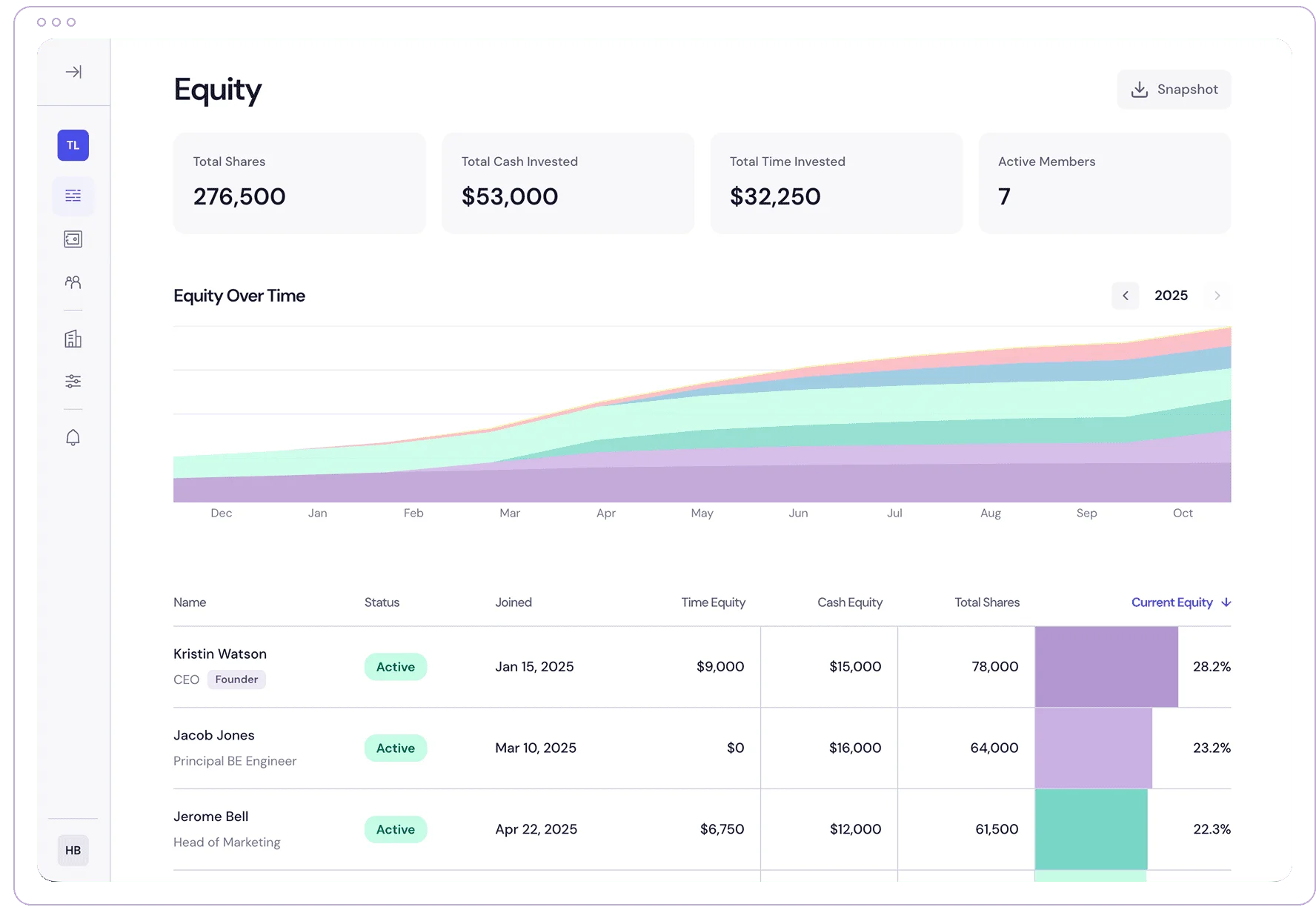
With dynamic equity, ownership adjusts based on actual contributions. If someone stops contributing, their slice of the pie stops growing while yours continues.
| Scenario | Fixed Equity | Dynamic Equity |
|---|---|---|
| Co-founder works less | They keep same percentage | Their percentage stops growing |
| Co-founder leaves at month 6 | Cliff protects you | Equity reflects actual contribution |
| Co-founder fades over 2 years | They’ve vested significant equity | Ownership naturally adjusted along the way |
Dynamic equity doesn’t prevent the hard conversation, but it does mean that ownership reflects reality throughout the relationship.
The best time to implement dynamic equity is at the beginning. The second best time is now.
The Legal Side
None of this is legal advice. Get a lawyer. But here’s what to know.
If You Have an Operating Agreement (LLC)
Your operating agreement should address:
- What happens when a member stops contributing
- Valuation mechanisms for buyouts
- Voting thresholds for removing a member
If your agreement is silent on these issues, negotiation is your only path.
If You Have a Stockholder Agreement (Corporation)
Similar provisions should exist. Look for:
- Drag-along and tag-along rights
- Right of first refusal
- Termination and repurchase provisions
If You Have Nothing in Writing
This is bad. You’ll need to negotiate everything from scratch, and the departing founder has leverage because you need their cooperation.
Lesson: Always have written agreements. A few thousand dollars in legal fees upfront saves tens of thousands later.
When to Cut Your Losses
Sometimes you’ve done everything right and the co-founder still won’t engage or leave. At some point, you have to make a decision.
Consider parting ways when:
- The direct conversation produced no change
- Commitments are repeatedly broken
- The slow fade has continued for 3+ months
- Their presence is affecting team morale
- You’re building resentment that will poison future collaboration
The sunk cost fallacy applies here. The equity they already have is gone. The question is whether continued partnership serves the company’s future.
Preventing This Next Time
If you start another company or add another co-founder, protect yourself:
Use vesting with acceleration triggers. Standard 4-year vesting, but with provisions for what happens if someone stops contributing.
Consider dynamic equity. Let ownership reflect contribution from the start.
Document contribution expectations upfront. What does “full-time” mean? What are each person’s responsibilities? Put it in writing.
Schedule regular equity check-ins. Quarterly conversations about whether the split still feels fair. The equity review matrix framework gives you a structured way to run these reviews — plotting contribution-ownership gap against performance trajectory tells you exactly what action to take, and when. Catch problems early.
Include clear exit provisions. What happens if someone leaves? What if they’re asked to leave? Define it before emotions run high.
Famous Co-Founder Disputes: What Went Wrong
Frequently Asked Questions
What should I do if my co-founder has stopped working but won’t resign?
Have a direct conversation naming the problem. If that doesn’t produce change, you’ll need to negotiate an exit. This typically involves buying out their equity or finding a way for them to resign in exchange for keeping some or all of their vested shares. Consult a lawyer, as this can get complicated depending on your company structure.
Can I remove a co-founder who isn’t contributing?
It depends on your legal documents. If you’re an LLC with a good operating agreement, there may be provisions for removing a non-contributing member. If you’re a corporation, the board may be able to terminate their employment (though they’d keep vested shares). Without clear documentation, you’ll need the co-founder’s cooperation to effect a clean separation.
How does dead equity affect fundraising?
Investors scrutinize cap tables for red flags, and significant ownership held by inactive founders is a major one. It signals poor governance, potential legal disputes, and a cap table that will need cleaning up before exit. Some investors will require you to resolve the dead equity situation before they’ll invest.
How do you prevent co-founder disengagement in the first place?
Clear expectations upfront, written agreements with contribution requirements, regular check-ins about equity and workload, and vesting schedules that protect against early departure. Consider dynamic equity to ensure ownership always reflects actual contribution.
The co-founder who stops contributing is painful. But the longer you ignore it, the worse it gets. Have the hard conversation early. Document everything. And structure your equity so that ownership always reflects reality.
If you’re building a company now and want to prevent this situation, see how EquityMatrix handles contribution tracking and dynamic ownership.
Ready to split equity fairly?
Equity Matrix tracks contributions and calculates ownership automatically.
Get Started FreeThis article is for informational purposes only and does not constitute legal, tax, or financial advice. Equity Matrix is not a law firm, accounting firm, or financial advisor. Consult a qualified professional for guidance specific to your situation.

Co-founder, Equity Matrix
Sebastian writes about startup equity, founder dynamics, and building fair partnerships.
Keep reading
How to fire a co-founder (and what happens to their equity)
Firing a co-founder is legally and emotionally brutal, and the equity is the part that haunts you. Here's how to do it right, what vesting and cliffs actually protect, and how to avoid leaving a dead stake on your cap table.
Read more →How to buy out a business partner: a complete guide
A practical guide to buying out your business partner, from valuing the business to structuring the deal and avoiding costly mistakes.
Read more →