Germany at a glance
Default split
Equal among partners
Startup entity
Gesellschaft mit beschränkter Haftung (GmbH)
Minimum capital
€25,000 (€12,500 at incorporation; or €1 for UG)
Community property
Yes
Formation cost
€600–€2,000 (notary required)
Key legislation
GmbH-Gesetz (GmbHG), Handelsgesetzbuch (HGB)
Germany requires notarization of GmbH articles of association, adding time and cost to formation. The UG (Unternehmergesellschaft) variant allows starting with just €1 capital but requires retaining 25% of profits until €25,000 is reached. Germany's GbR (civil law partnership) reform in 2024 introduced a partnership register, making GbR partnerships more transparent. The INVEST grant reimburses 25% of angel investments up to €500,000.
Default partnership rules in Germany
In a German GbR (Gesellschaft bürgerlichen Rechts, civil law partnership), profit sharing follows the cascade in §709(3) BGB (German Civil Code, as reformed by MoPeG in January 2024): agreed participation ratios apply first, then the ratio of agreed contribution values, and if neither was agreed, profits are shared equally per capita — regardless of how much capital each partner actually put in. Losses are shared in the same ratio as profits. Since the MoPeG reform, GbR partnerships can register in the partnership register, gaining legal entity status. In a commercial partnership (OHG), the same §709(3) BGB cascade applies — with no agreement at all, profits are split equally unless the partnership agreement provides otherwise. Partners are jointly and severally liable.
The most important takeaway: profits are split equally by default in Germany, regardless of capital contributions. If you and a partner start a business and one of you invests €100,000 while the other invests €5,000, you still split profits 50/50 without a written agreement. This default can be overridden by a partnership agreement.
Gesellschaft mit beschränkter Haftung (GmbH) in Germany
The GmbH is the standard entity for German startups. Minimum share capital is €25,000, of which at least €12,500 must be paid at incorporation. Formation requires notarization of the articles of association (Gesellschaftsvertrag), which costs €600–€2,000 depending on complexity. The UG (haftungsbeschränkt) is a GmbH variant that can be formed with just €1 in capital but must retain 25% of annual profits until reaching the €25,000 threshold. Shares in a GmbH are transferred by notarial deed only. A shareholders' agreement (Gesellschaftervereinbarung) is separate from the articles and is not publicly filed.
Without a shareholders' agreement, the relationship between founders is governed by the country's default rules, which rarely account for the realities of a startup — where contributions change over time and early effort often goes uncompensated. An operating agreement or shareholders' agreement is essential. Use our equity calculator to determine a fair split based on actual contributions, or our partnership calculator if you're splitting profits between partners.
What happens when a partner leaves in Germany
In a GbR, any partner can terminate the partnership with six months' notice (§723 BGB). Death or bankruptcy of a partner dissolves the partnership unless the partnership agreement says otherwise. For a GmbH, shareholders can only exit by selling their shares (requiring notarization) or through a capital reduction. The GmbH articles or a shareholders' agreement can include drag-along, tag-along, and good/bad leaver provisions. Minority shareholders have limited remedies compared to common law jurisdictions.
A written agreement should address departure terms specifically, including how the buyout value is calculated, the payment timeline, vesting schedules, and any non-compete provisions. Understanding the concept of dead equity is important for managing these situations. Learn more about how dead equity affects businesses.
Marriage and business equity in Germany
Germany's default matrimonial property regime is Zugewinngemeinschaft — community of accrued gains. Each spouse retains ownership of their own assets during the marriage, but on divorce, the net gain accumulated during the marriage is equalized. If one spouse's business increased in value by €500,000 during the marriage while the other gained only €100,000, the difference (€400,000) is split equally, resulting in a €200,000 equalization payment. A marriage contract (Ehevertrag) can modify this, though courts may set aside provisions they consider grossly unfair.
Important for Germany business owners: Germany uses Zugewinngemeinschaft (community of accrued gains) by default — not full community property. Each spouse retains their own assets, but gains accumulated during marriage are equalized on divorce. Business owners should consider a pre-nuptial or post-nuptial agreement to protect their equity interests.
Formation and cost details
| Main startup entity | Gesellschaft mit beschränkter Haftung (GmbH) |
| Minimum capital | €25,000 (€12,500 at incorporation; or €1 for UG) |
| Formation cost | €600–€2,000 (notary required) |
| Default equity split | Proportional to share capital contributions |
| Default partnership split | Equal among all partners |
| Community property | Yes |
| Key legislation | GmbH-Gesetz (GmbHG), Handelsgesetzbuch (HGB) |
Frequently asked questions
What is the minimum capital for a German GmbH?
A full GmbH requires €25,000 in share capital, with at least €12,500 paid at incorporation. The UG (haftungsbeschränkt) variant can be formed with as little as €1 but must retain 25% of annual profits until reaching €25,000. Both forms require notarization of the articles of association.
What is the default profit split in a German partnership?
§709(3) BGB sets a cascade for the GbR (civil law partnership): agreed participation ratios apply first, then the ratio of agreed contribution values, and if nothing was agreed, profits are split equally per capita. Since the 2024 MoPeG reform, the same cascade applies to OHG commercial partnerships. So with no agreement at all, the default is an equal split — and any of these defaults can be overridden by the partnership agreement.
How does German matrimonial property affect businesses?
Germany uses Zugewinngemeinschaft — community of accrued gains. Each spouse keeps their own assets during the marriage, but the net gains are equalized on divorce. If your business gained €500,000 in value during the marriage, you may owe your spouse an equalization payment equal to half the difference between your respective net gains.
Do I need a notary to form a GmbH?
Yes. Both the articles of association and any share transfers must be notarized. This costs €600–€2,000 for initial formation. The notary requirement adds cost and time but provides legal certainty and prevents fraudulent formation.
Related resources
- Equity calculator: find a fair split for your business
- Partnership calculator: split profits fairly between partners
- Does your small business need an equity agreement?
- Equity for small businesses: the complete guide
- Dead equity calculator: how much is yours costing you?
- Slicing Pie calculator
- What is an operating agreement?
- All 32 European countries: partnership and formation laws
- US state directory: partnership and LLC default rules
Partnership laws in neighboring countries
Disclaimer: This page provides general information about Germany partnership and business formation laws and is not legal advice. Laws change, and the information here may not reflect the most recent amendments. The formation costs and capital requirements listed are approximate and may vary. Consult a qualified attorney licensed in Germany for advice specific to your situation. Equity Matrix is a software tool for tracking contributions and calculating equity; it does not provide legal services.
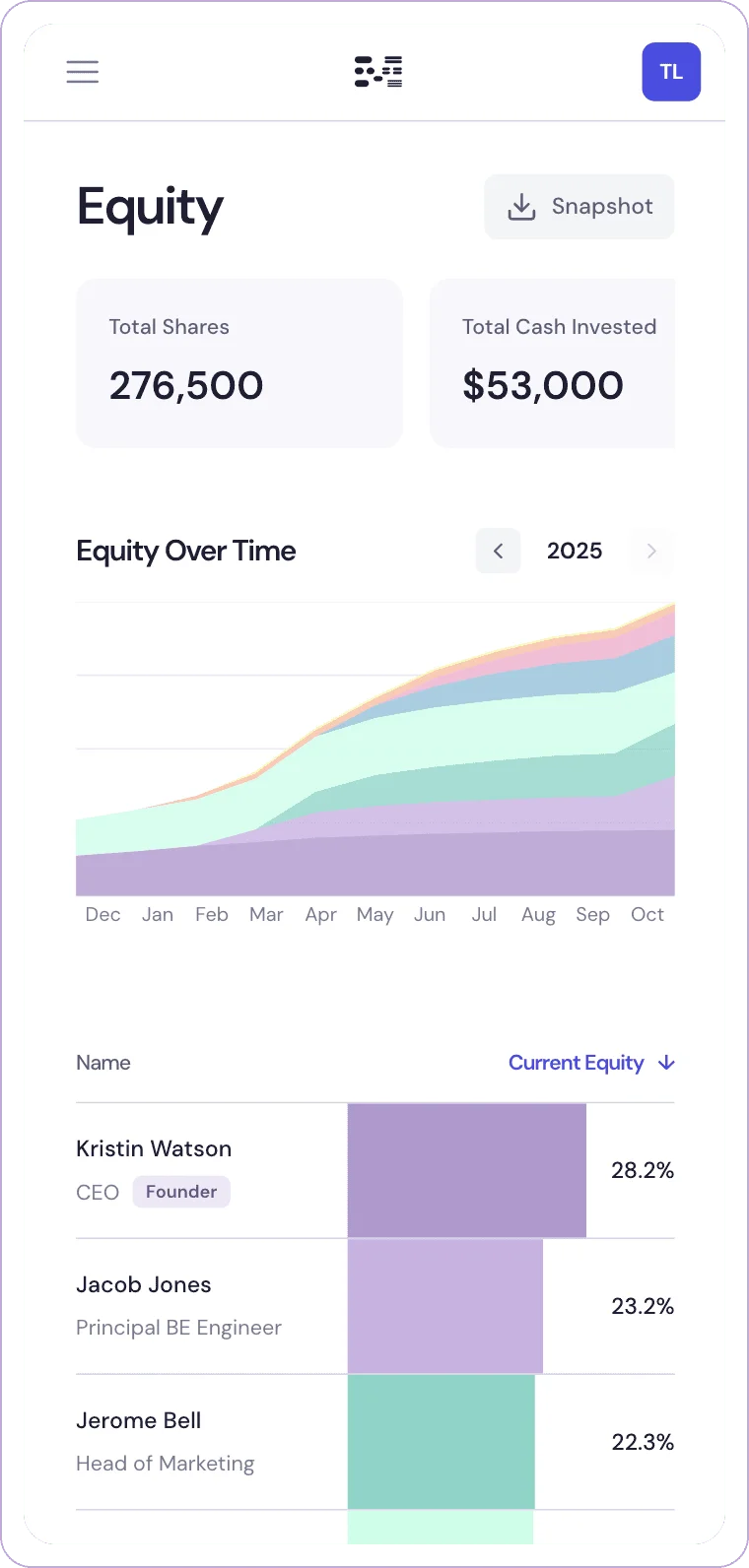
Replace Germany's defaults with a fair agreement.
Equity Matrix tracks contributions and calculates ownership automatically, so your agreement reflects what your team actually built together.