Iceland at a glance
Default split
Equal among partners
Startup entity
Einkahlutafélag (ehf.)
Minimum capital
ISK 500,000 (~€3,400)
Community property
Yes
Formation cost
ISK 140,500–200,000 (~€880–€1,350)
Key legislation
Lög um einkahlutafélög (Private Limited Companies Act), Lög um sameignarfélög (Partnership Act)
Iceland is not an EU member but is part of the EEA, providing access to the EU single market. The Icelandic króna (ISK) creates currency risk for international businesses. The corporate tax rate is 20%. Reykjavik has a small but innovative startup scene, particularly in fishing technology, tourism tech, and renewable energy. Company formation is relatively expensive compared to other Nordic countries.
Default partnership rules in Iceland
In an Icelandic sameignarfélag (general partnership), profits are shared equally by default unless the partnership agreement provides otherwise. Partners are jointly and severally liable for partnership debts. The partnership must be registered with the Ríkisskattstjóri (Directorate of Internal Revenue). A partnership agreement is recommended but not legally required.
The most important takeaway: profits are split equally by default in Iceland, regardless of capital contributions. If you and a partner start a business and one of you invests €100,000 while the other invests €5,000, you still split profits 50/50 without a written agreement. This default can be overridden by a partnership agreement.
Einkahlutafélag (ehf.) in Iceland
The ehf. (Einkahlutafélag, private limited company) is the standard entity for Icelandic startups. Minimum share capital is ISK 500,000 (approximately €3,400). Formation costs ISK 140,500–200,000 and takes about 1–2 weeks. No notary is required. Shares can be structured in different classes. The articles of association (samþykktir) govern the company. A shareholders' agreement is recommended.
Without a shareholders' agreement, the relationship between founders is governed by the country's default rules, which rarely account for the realities of a startup — where contributions change over time and early effort often goes uncompensated. An operating agreement or shareholders' agreement is essential. Use our equity calculator to determine a fair split based on actual contributions, or our partnership calculator if you're splitting profits between partners.
What happens when a partner leaves in Iceland
In a sameignarfélag, a partner can withdraw according to the partnership agreement. For ehf. companies, share transfers follow the restrictions in the articles. Minority shareholders have limited remedies under Icelandic company law.
A written agreement should address departure terms specifically, including how the buyout value is calculated, the payment timeline, vesting schedules, and any non-compete provisions. Understanding the concept of dead equity is important for managing these situations. Learn more about how dead equity affects businesses.
Marriage and business equity in Iceland
Iceland uses marital property (hjúskapareignir) as the default regime. All property acquired during marriage is marital property and divided equally on divorce. A pre-nuptial agreement (kaupmáli) can exclude specific assets. Business interests acquired during the marriage are marital property. Iceland has among the most equal division rules in Europe — property is generally split 50/50 regardless of each spouse's contribution.
Important for Iceland business owners: Iceland uses hjúskapareignir (marital property). All property acquired during marriage is marital property and divided equally on divorce. Business owners should consider a pre-nuptial or post-nuptial agreement to protect their equity interests.
Formation and cost details
| Main startup entity | Einkahlutafélag (ehf.) |
| Minimum capital | ISK 500,000 (~€3,400) |
| Formation cost | ISK 140,500–200,000 (~€880–€1,350) |
| Default equity split | Based on share allocation at incorporation |
| Default partnership split | Equal among all partners |
| Community property | Yes |
| Key legislation | Lög um einkahlutafélög (Private Limited Companies Act), Lög um sameignarfélög (Partnership Act) |
Frequently asked questions
What is the minimum capital for an Icelandic ehf.?
The minimum share capital is ISK 500,000 (approximately €3,400). Formation costs ISK 140,500–200,000 and takes 1–2 weeks. No notary is required.
Is Iceland in the EU?
No. Iceland is not an EU member but is part of the EEA, which gives it access to the EU single market. Iceland uses the Icelandic króna (ISK), not the euro. The main difference for businesses is currency risk and non-participation in EU-only programs.
How are partnership profits split in Iceland?
In a sameignarfélag (general partnership), profits are split equally by default. Partners are jointly and severally liable for debts. A partnership agreement can set a different arrangement.
How does Icelandic marital property affect businesses?
Business interests acquired during marriage are marital property and divided equally on divorce. A pre-nuptial agreement (kaupmáli) can protect business equity. Iceland's equal-division default is among the most protective of non-owning spouses in Europe.
Related resources
- Equity calculator: find a fair split for your business
- Partnership calculator: split profits fairly between partners
- Does your small business need an equity agreement?
- Equity for small businesses: the complete guide
- Dead equity calculator: how much is yours costing you?
- Slicing Pie calculator
- What is an operating agreement?
- All 32 European countries: partnership and formation laws
- US state directory: partnership and LLC default rules
Partnership laws in neighboring countries
Disclaimer: This page provides general information about Iceland partnership and business formation laws and is not legal advice. Laws change, and the information here may not reflect the most recent amendments. The formation costs and capital requirements listed are approximate and may vary. Consult a qualified attorney licensed in Iceland for advice specific to your situation. Equity Matrix is a software tool for tracking contributions and calculating equity; it does not provide legal services.
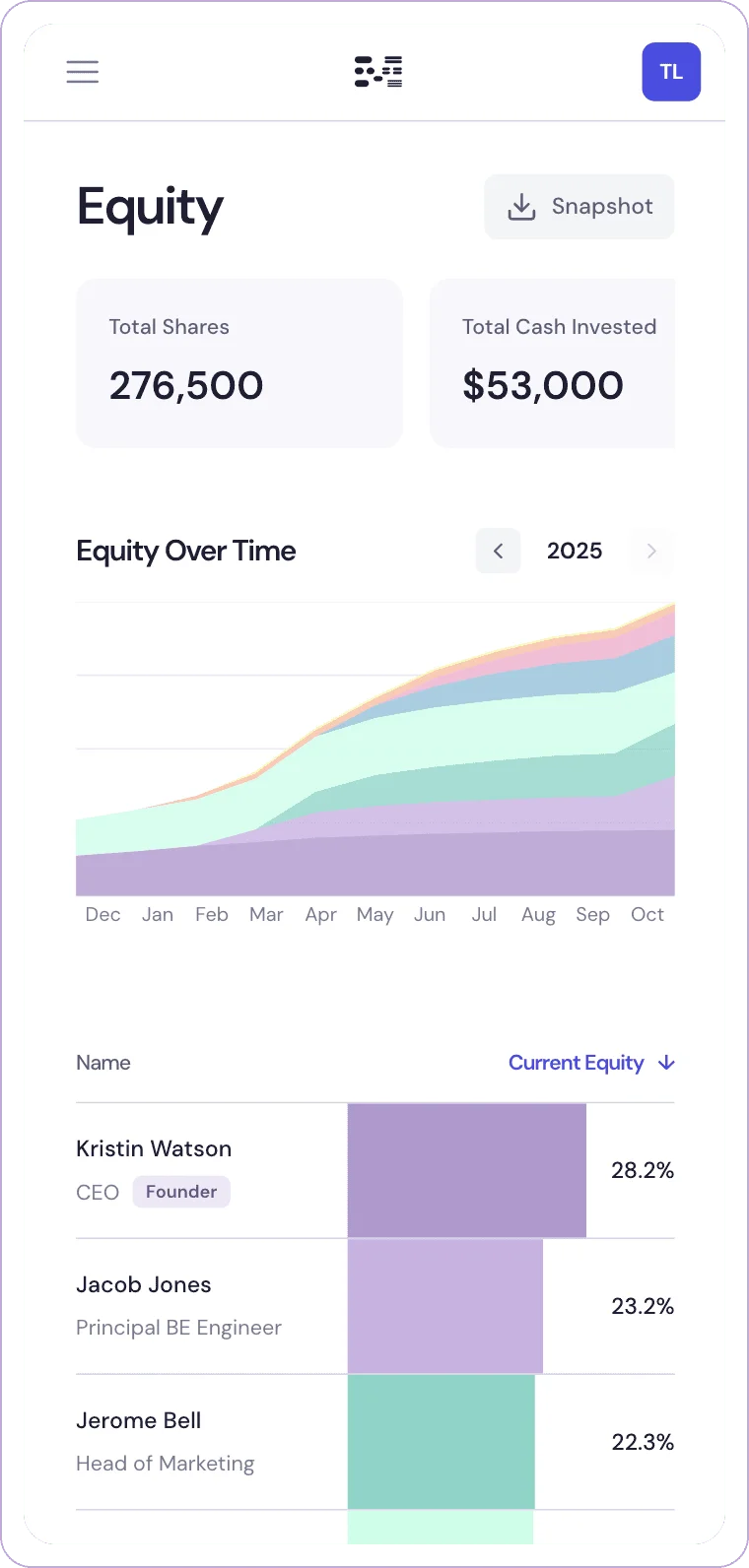
Replace Iceland's defaults with a fair agreement.
Equity Matrix tracks contributions and calculates ownership automatically, so your agreement reflects what your team actually built together.