Oregon at a glance
Partnership law
RUPA (revised)
LLC default split
Proportional to capital
Operating agreement
Not required
Community property
No
Formation cost
$100
Annual cost
$100 annual report fee
Oregon follows RUPA for partnerships and traditional capital-contribution-based defaults for LLCs. The state has no sales tax but imposes a state income tax. Oregon has a growing tech sector in Portland.
Default partnership rules in Oregon
Oregon adopted RUPA, treating partnerships as separate entities with equal profit sharing by default. Partners have equal management rights and owe fiduciary duties.
The most important takeaway: profits are split equally by default in Oregon, regardless of capital contributions. If you and a partner start a business and one of you invests $100,000 while the other invests $5,000, you still split profits 50/50 without a written agreement. This is true in every US state, including Oregon. Our partnership calculator can help you work out a split that reflects what each partner actually contributes.
LLC defaults in Oregon
Oregon allocates LLC profits and losses in proportion to capital contributions by default. An operating agreement is not required. Oregon has no sales tax, which can benefit certain businesses, but the state imposes an income tax on business profits.
Oregon defaults to proportional distributions based on capital contributions, which aligns better with many founders' expectations than equal-split states. However, capital contributions alone rarely tell the full story. A founder contributing time and expertise may receive nothing if they didn't invest cash. An operating agreement can account for all types of contributions. Our equity calculator can help you determine a fair arrangement.
What happens when a partner leaves in Oregon
Under Oregon's RUPA, a partner's departure does not dissolve the partnership. The partnership continues, and the departing partner is entitled to a buyout at fair value.
A written partnership agreement should still address departure terms specifically, including how the buyout value is calculated, the payment timeline, and any non-compete provisions. While RUPA provides a default framework, the details of a buyout can still lead to disputes if not spelled out in advance. Understanding the concept of dead equity is important for managing these situations. Learn more about how dead equity affects businesses.
Marriage and business equity in Oregon
Oregon is an equitable distribution state. Business interests acquired during marriage are marital property. Oregon courts have broad discretion in property division and consider all relevant factors.
Even though Oregon is not a community property state, marriage can still affect your business equity. In equitable distribution states, courts divide marital property based on what is fair, which may include business interests acquired or grown during the marriage. A clear equity agreement and proper documentation of ownership can help protect your business in the event of a divorce.
Formation and cost considerations in Oregon
| Formation cost | $100 |
| Annual/recurring cost | $100 annual report fee |
| State income tax | Yes |
| Partnership law | RUPA (revised) — partnership continues after departure |
| LLC default distributions | Proportional to capital contribution |
| Operating agreement | Not required (strongly recommended) |
Frequently asked questions
How much does an Oregon LLC cost?
Oregon LLC formation costs $100, and the annual report fee is $100. First-year costs are at least $200 before legal fees.
Does Oregon have a sales tax?
No, Oregon is one of the few states with no sales tax. This can benefit businesses selling goods, though the state does impose an income tax on business profits.
What is the default LLC profit split in Oregon?
Oregon defaults to proportional allocation based on capital contributions. An operating agreement can change this.
How do Oregon partnerships work?
Oregon follows RUPA, treating partnerships as separate entities with equal profit sharing by default and allowing a partner to leave without dissolution.
Related resources
- Equity calculator: find a fair split for your business
- Partnership calculator: split profits fairly between partners
- Does your small business need an equity agreement?
- Equity for small businesses: the complete guide
- Dead equity calculator: how much is yours costing you?
- Slicing Pie calculator
- What is an operating agreement?
- All 50 states: partnership and LLC default rules
Partnership laws in neighboring states
Disclaimer: This page provides general information about Oregon partnership and LLC default rules and is not legal advice. Laws change, and the information here may not reflect the most recent amendments. The formation costs and annual fees listed are approximate and may vary. Consult a qualified attorney licensed in Oregon for advice specific to your situation. Equity Matrix is a software tool for tracking contributions and calculating equity; it does not provide legal services.
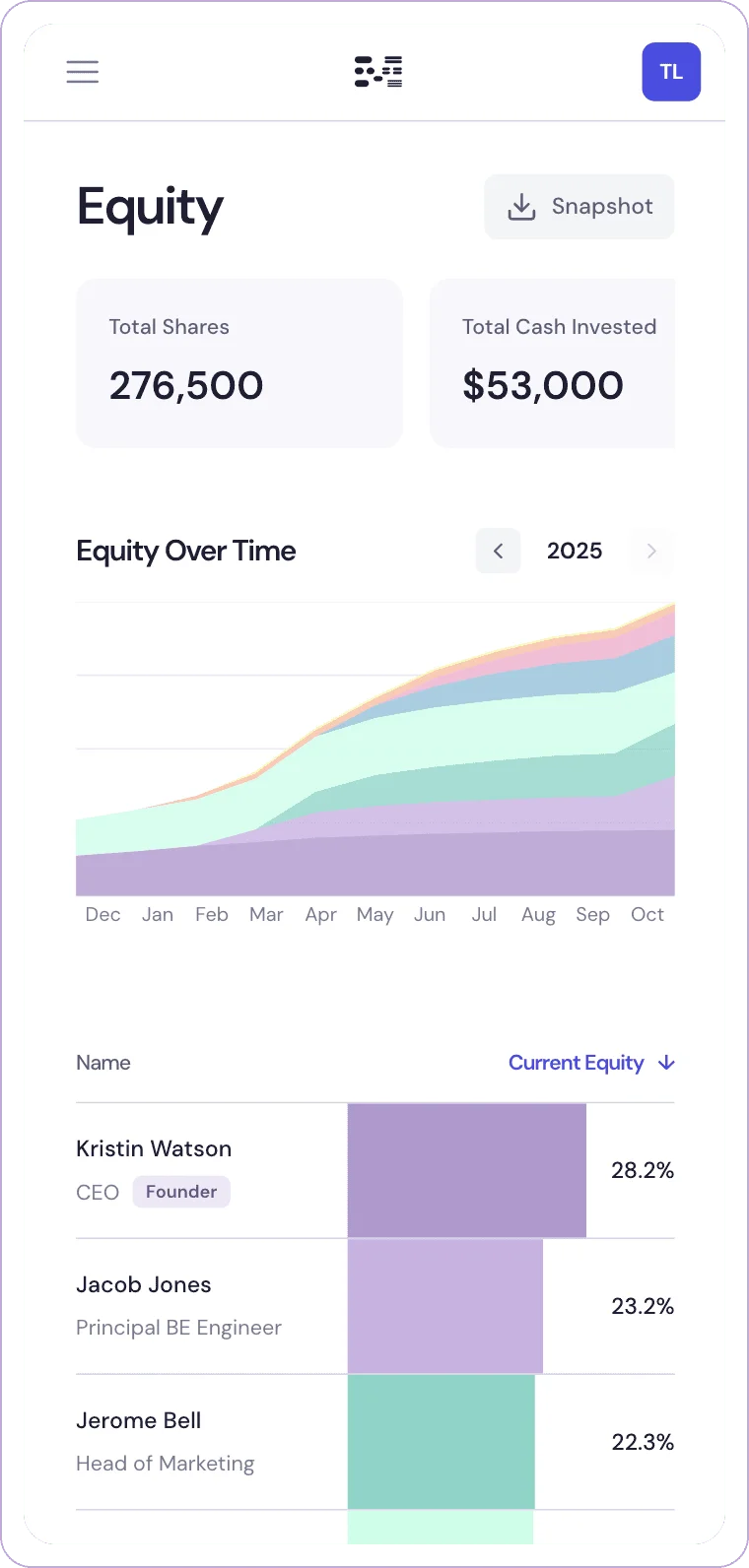
Replace Oregon's defaults with a fair agreement.
Equity Matrix tracks contributions and calculates ownership automatically, so your agreement reflects what your team actually built together.